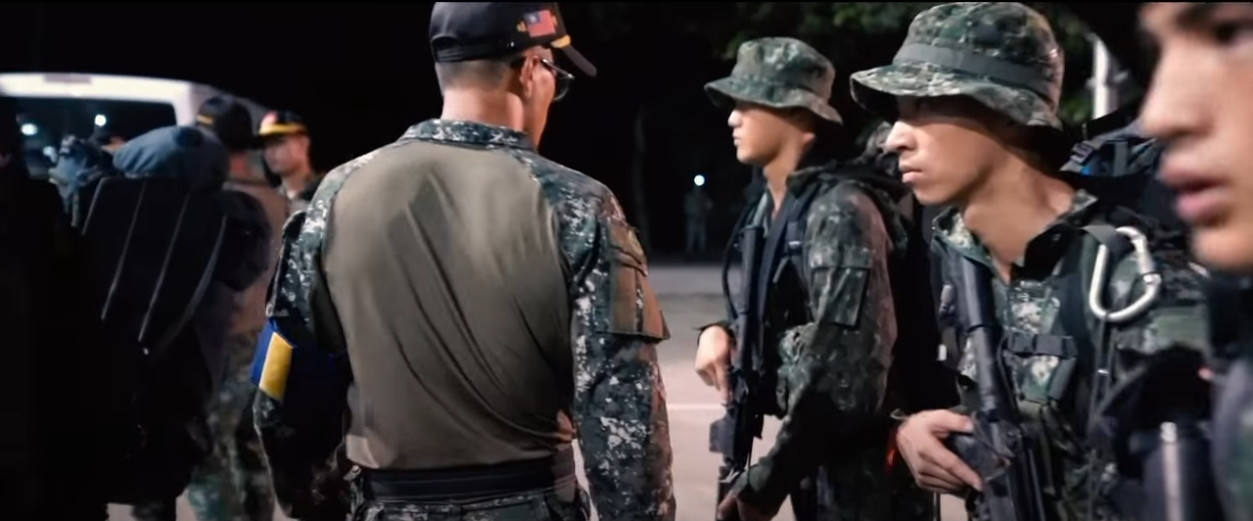
Hey there, future soldiers and already-served veterans! I’m Rays, your friendly blogger-comrade, and today we’re tackling a skill in the ROC compulsory military service that’s even more crucial than the actual training: “Surface Work” (表面工夫)!
Did you think military service was just about learning how to fight? Nope! It’s actually about obedience and, most importantly, Surface Work!
You’ve probably heard the military saying: “They don’t punish the diligent, they don’t punish the lazy; they only punish those who don’t ‘watch their step’” (不打勤,不打懶,專打不長眼). This phrase cuts right to the heart of military life: no matter how much you do or how hard you work, if you don’t “watch your step” (長眼) and accidentally step on a landmine, you’ll still get chewed out. The concrete expression of “watching your step” is making sure your Surface Work is absolutely flawless!
At its core, Surface Work means presenting the “proper military image” to your superiors. It’s not just about passing inspections; it’s a survival strategy to secure precious rest time and avoid unnecessary trouble.
I’ll start with the fundamentals of Etiquette, teaching you how to navigate the camp with a simple “Good morning, Sir/Ma’am!” Next up is the Interior Tidy-Up method to guarantee a good night’s sleep. Finally, we’ll cover the Unit Uniformity skills that help you blend in and avoid being “singled out” for special attention.
Ready? Let’s dive in and learn how to become a smart soldier who scores perfectly on the “Surface Work” test!
I. Etiquette: “Good Morning, Sir/Ma’am” — The Universal Opener
1. Who is the Superior? The Go-To Opener: “Good Morning, Sir/Ma’am!”
【Secret: Just Say It—You Have Nothing to Lose!】
Did you think only Commissioned Officers were “Superiors” (長官)? Wrong! In the military, anyone with a rank higher than yours is a “Superior” (or in a position of authority).
The Rookie Trainee: As a trainee, you haven’t been assigned the lowest rank yet. So, when you encounter all career-track personnel, and second-stage conscripts (who hold the lowest Private rank), you must greet them as “Senior Soldier/Teammate” (學長好).
NCOs and Above: For Non-Commissioned Officers (NCOs, like Sergeants and higher-ranking NCOs) and Officers (like Platoon Leaders and Company Commanders), the safest all-purpose greeting is: “Good morning, Sir / Ma’am.” (or Good afternoon/evening).
💡 The “Watch Your Step” Key: The Civilian-Clothed Boss
Be extra cautious when you see someone in civilian clothes in the camp! They are very likely a higher-ranking officer (Battalion Commander, Brigade Commander, etc.) who is “big enough” to dress casually within the base.
Survival SOP: When walking around the camp, your eyes must be scanning like radar! If you see anyone without a “Trainee ID Card” or “Numbered Vest,” just shout, “Good morning, Sir / Ma’am!” Even if the person ignores you or doesn’t hear you, you have completed the required action, and you’ve avoided one opportunity to get chewed out!
【Ray’s Story】
I remember one time our company was reported for being “disrespectful” because too many guys failed to greet a senior officer. The result? During the morning roll call, we spent an excessive amount of time practicing the salute. Our hands were held up for so long that they went numb while the Drill Sergeants adjusted everyone’s posture one by one. If it were worse, our phone time in that day might have been cancelled.
2. The Exclusive Password: “Good morning, Sergeant.”
While “Good morning, Sir/Ma’am” is universal, if you are past the fourth week of basic training, it’s best to address the cadres within your company by their rank/title. This shows you’re not being lazy or failing to “watch your step.”
Company Cadres: The people you see most often are definitely the Sergeants (Corporal, Sergeant). Next are the Political Officer (commonly known as POA in Taiwan) and Company Commanders. Within your own company, saying “Good morning, Sergeant” has a very high hit rate!
The Safety Net: If you encounter a Sergeant who just returned from a month-long leave and you don’t know them, or if you’re afraid of addressing them incorrectly, the safest bet remains: Good morning, Sir / Ma’am!
3. Precision Salute: The Command for Unison
The military demands “uniformity”—even greetings and salutes must be synchronized as if done by a single person! Thus, the precision of commands and movements becomes your main performance target.
Soldiers
Caller
Timing / Command
Action
Solo
Self
Upon sight
Shout “S/M” with salute, then drop arm
Two
Right Soldier
4–6 steps before, shout “Present Arms!”
Both shout “S/M”, Salute
Two
Right Soldier
After passing, shout “Order Arms!”
Both drop hand
4+ (No Officer)
Front Soldier
Upon sight, shout “Present Arms!”
All shout “S/M”, No Salute
4+ (With Officer)
Officer
See High-Rank (Star), “Eyes—Left!”
All shout “S/M”, head turns left, No Salute
* The above-mentioned “S/M” refers to “Good morning, Sir/Ma’am” or using the superior’s rank.
【Ray’s Reminder】
This is the area where you are most likely to be singled out and corrected! If your footsteps, verbal commands, or hand movements are even slightly out of sync, the superior’s eyes will instantly lock onto you. Therefore, “Etiquette” is the very first “Surface Work” test upon entering the camp!
【Secret: The Superior’s Eyes Only See the Surface!】
The focus of interior inspections is “visual tidiness.” Cadres won’t waste time flipping your items. As long as the surface looks like a pristine model room, it doesn’t matter if the inside looks like it was hit by a shell!
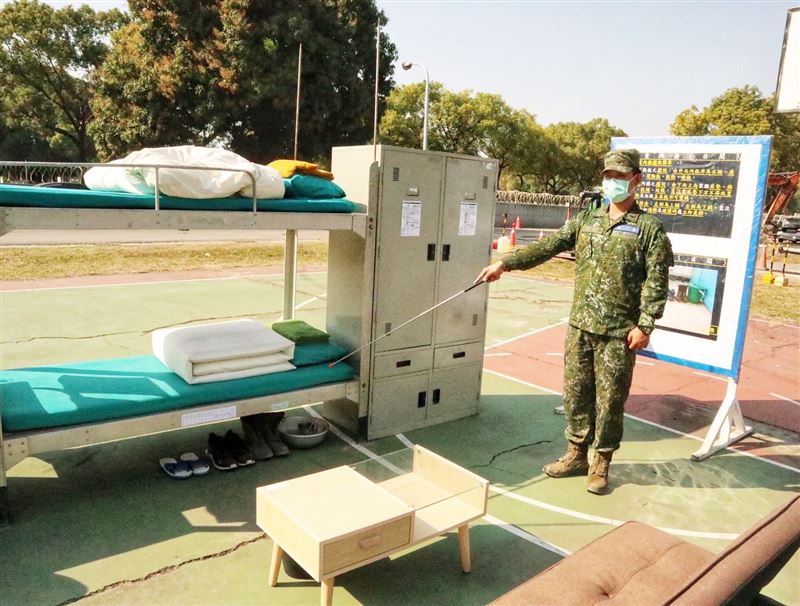
1. The Three Bed Treasures & The Starry Space Beneath
The “Three Bed Treasures” are the Quilt, Mosquito Net, and Pillow.
The Quilt (Tofu Block): You don’t need perfect right angles, but the top, left, right, and front must look flat and uniform. Stuffing phone cards or cardboard inside helps maintain the shape. The goal: from a distance, it must look like a smooth block of tofu!
The Mosquito Net: Although it’s soft like gauze, it must also be folded to show a flat surface and right angles. This requires practice, pinching the edges, and using cardboard support to prevent collapse.
The Pillow: Flatten the pillowcase and the sheet. That’s it.
💡 The “Treasure Map” of the Grey Area
Since they only check the surface, the interior is your private space!
Under the Pillow: Items for before bedtime/getting up, such as a fan or flashlight. Without a flashlight, you can’t see what you’re folding before the lights are on, and you can’t leave the dorm.
Inside the Quilt: Spare undershirts and socks, preventing your locker from overflowing.
Under the Mattress: Chopsticks, numbered vests, etc.—keep them out of the locker’s inspection area!
2. The Shoe Board: The “Second Storage Box” Hiding Spot
The shoe board must hold the stool, basin, steel cup, toothbrush, toothpaste, and shoes, all arranged neatly.
【Pro Tip: The Shoe Board Stash】
At the very end of the shoe board, since you’ll be wearing one pair of shoes, there will be an empty space of about 20-by-30 cm. This space is perfect for hiding a “storage box”! This space is technically for your civilian shoes, but you can hide those in your duffel bag.
Why is it safe? Cadres typically won’t shine a flashlight into that shadowy spot during inspection. Even if they spot a box, it’s hard to confirm its position on the “shoe board,” avoiding demerits.
What to stash? Is your locker crowded and flimsy? Move your spares here! Like stationery, plastic bags, ointment, and even a power bank!
【Power Bank Q&A】
Q: Cell phones are allowed daily, so why hide the power bank here?
A: During basic training, phones are allowed for a maximum of one hour daily (plus up to four hours during commutes), so if your phone lasts over ten hours, extra charging is usually unnecessary, making the power bank a spare item. When you move to your permanent unit (下部隊), where phones are carried, you’ll put the power bank somewhere more accessible.
3. The Magic Space of the Locker
Mantra: Surface Tidy! Surface Tidy! Surface Tidy! (It’s very important, so say it three times.)
Top Shelf: You can hide masks behind the primary storage box; chopsticks can be slipped between the box and the tissue.
Middle Shelf: Use a towel to neatly cover your clothes. As long as the towel surface is flat and the items underneath aren’t piled high, the cadres won’t bother you.
Bottom Shelf: Two large water bottles. As long as they contain water, the space behind them is your sanctuary! Stuff whatever you want back there.
III. Unit Uniformity: Blend In, Don’t Be “The Special One”
Remember the core concept: “They don’t punish the diligent, they don’t punish the lazy; they only punish those who don’t ‘watch their step’” (不打勤,不打懶,專打不長眼). Your goal in the unit is invisibility—make sure you are never “the special one.”
1. Pay Attention in Class, Note-Taking Saves Lives
The subjects taught in the military, especially Rifle Operation, Qualification Tests, and Individual Combat Training (單戰), are practical and directly affect your graduation.
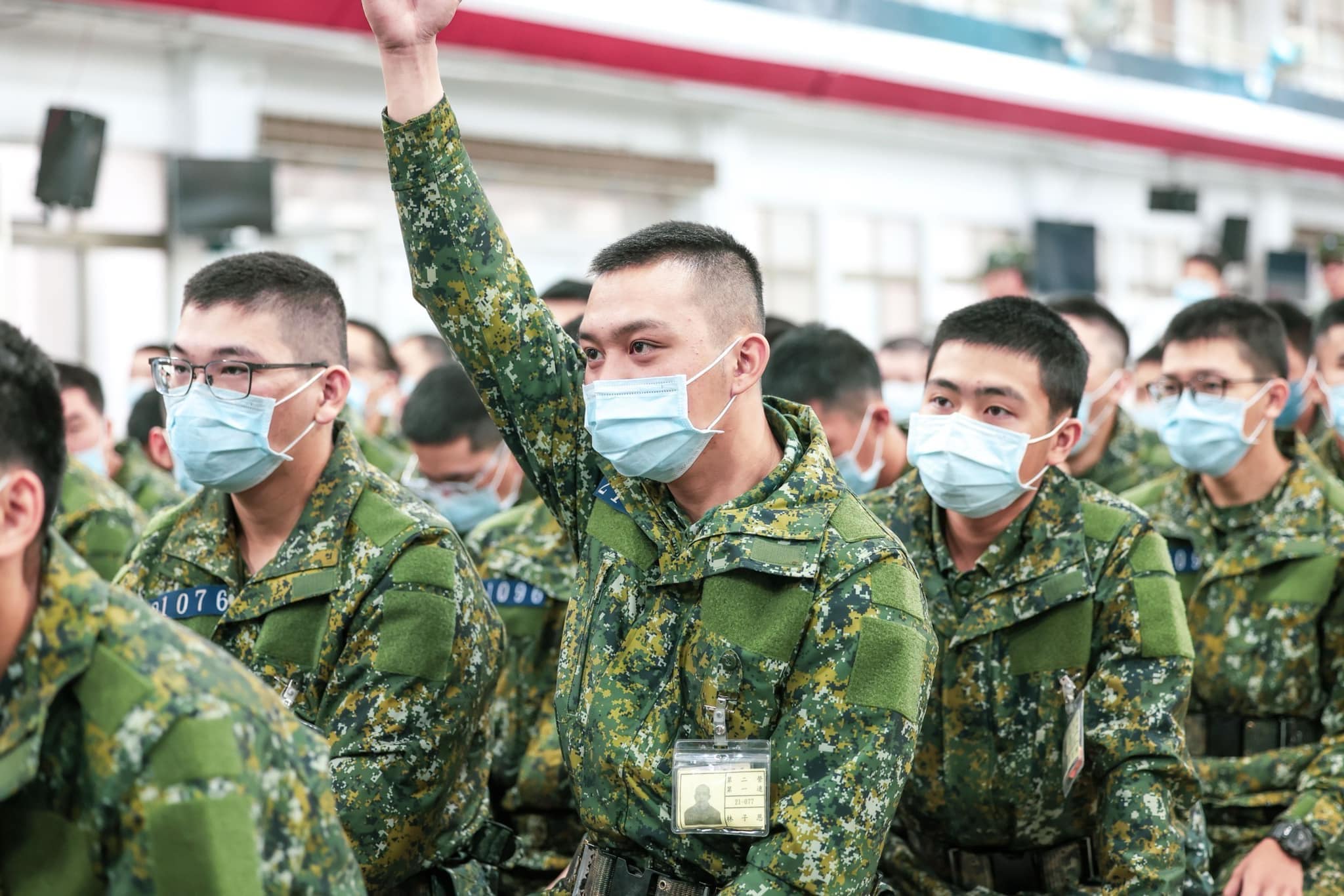
Classroom State: Revert to your junior high student self! No sleeping, no long periods of looking down, and absolutely no messing around (like air-humping… you will be called up to demonstrate!).
The “Busted” SOP: Falling asleep for too long? You’ll be called up to answer questions, be put in time-out, or asked to hold a heavy, awkward training aid. You don’t want to be standing at attention carrying a rocket launcher!
Books & Cheat Sheets: During basic training, you generally cannot read your own books during class. However, you can fold cheat sheets into a size that fits your waterproof pocket pouch and secretly read them below, as long as the cadre doesn’t see the content.
2. Self-Rescue for Mental Exhaustion
The long hours of mental tension will inevitably lead to drowsiness.
Quick Fixes: Borrow Green Oil (綠油精) from a neighboring soldier to rub on your mask, or grab a can of coffee from the vending machine during break time.
Safe Zone: If the lecture is dull or you are waiting for your turn, you can follow the Sergeant’s advice to recite reporting phrases or write in your diary. As long as you are “quiet” and “awake,” the cadres usually won’t care what you do.
The Last Resort: If you absolutely cannot stay awake, raise your hand to request permission to stand up and listen or go wash your face.
(Image from 國防部發言人Facebook)
⚠️ Viewing Rules: No Cheering!
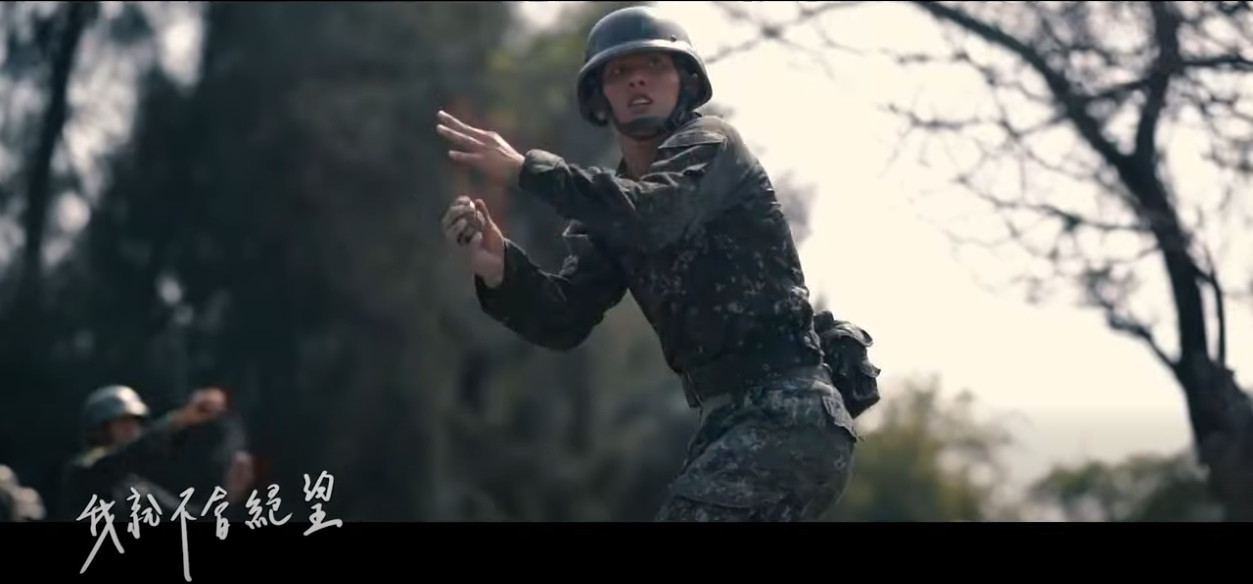
When practicing grenade tossing, shooting, or individual combat training, never cheer or gasp because a teammate performs too well or too poorly! Any sound will immediately get you called out and handed a punishment slip.
【Ray’s Story】
Someone tossed a grenade 45 meters! Everyone gasped, “Whoa, better than the Sergeant, he can go to the Hi-Life convenience store!” The Sergeant immediately yelled, “About-face! No more watching!” and stripped us of our entertainment.
(Image from 國防部發言人 Facebook)
3. Ask More, Be “Clever”: Avoid Being “The Special One”
Units frequently divide into tasks (fatigues, combat training, firing practice), which often leads to an “information gap.”
Mutual Reconnaissance: Make friends with neighboring soldiers and ask each other about the “next gathering time, required uniform, and equipment.” Avoid the stupid mistake of being the only person without a raincoat or not knowing the deadline update.
Power of the Group: If everyone is confused about the assembly time, the easiest way is to ask the Duty Sergeant directly. Another choice: If “at least one square formation (方隊)” wears and carries the same thing, the Sergeant can’t punish you, as he failed to give clear instructions.
One command, one action, like a soulless robot. This way, you won’t hear the Sergeant say: “Only you are special,” or “Everyone else knows but you.”
Conclusion: Good Surface Work, Good Daily Life
Etiquette, Interior Tidiness, Unit Uniformity—all of this is merely “Surface Work”.
Your objective is to ensure that the superior’s inspection moves from Point A to Point B without any reason to stop and nitpick you. As long as your Surface Work is flawless, the cadres won’t “watch their step” on you, and you can pass your military service peacefully, securing more rest and free time!
Master the Surface Work, Master Your Days!
Do you have any exclusive “Surface Work” survival secrets? Share your thoughts and this article with other “reluctant soldiers” (不願役)!